
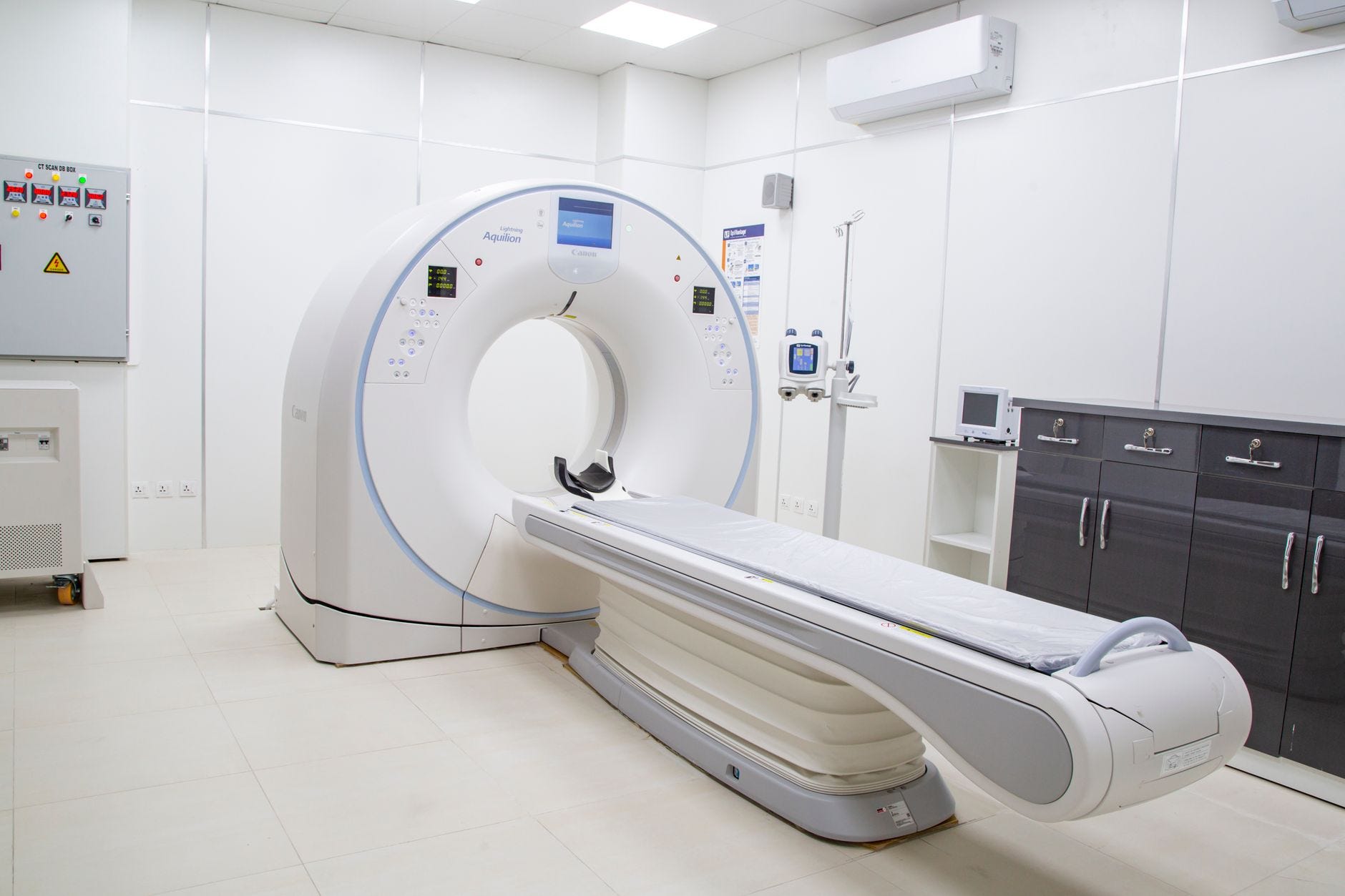
The most dangerous regulatory proposals in healthcare are rarely the obvious ones. They arrive as footnotes inside 1,200-page payment rules, framed as technical corrections or beneficiary cost-sharing adjustments. The CMS CY 2027 OPPS proposed rule, released July 2, 2026, contains exactly this kind of proposal - a site-neutral payment expansion targeting noncontrast imaging that would slash reimbursement rates by approximately 60% for services furnished in excepted off-campus provider-based departments.
This is not a modest tweak. It is a structural challenge to how outpatient imaging has been financed for the past decade, affecting hospital outpatient departments, radiology group stipend arrangements, academic department budgets, and the financial viability of imaging programs that anchor community healthcare access in cities and suburbs alike.
The comment deadline is August 31, 2026. After that, the window closes and CMS moves toward a final rule. Every radiology practice leader, hospital CFO, and imaging center operator needs to understand what is in this proposal before they miss the opportunity to influence it.
📊 $260M in projected Medicare savings - $190M in Part B reductions, $70M in reduced patient premiums - all from cutting HOPD noncontrast imaging rates to PFS levels
1. What CMS Is Actually Proposing
The CY 2027 Outpatient Prospective Payment System (OPPS) proposed rule, published in July 2026, includes a significant expansion of CMS's site-neutral payment policy. The term "site-neutral" sounds innocuous - it simply means paying the same rate for the same service regardless of where it is delivered. The policy rationale is defensible on its face: if a patient gets an MRI without contrast in a physician's office, why should Medicare pay dramatically more for that same scan performed in a hospital-owned outpatient department down the street?
But the practical impact on radiology revenue is anything but neutral.
Under the proposal, CMS would apply Physician Fee Schedule (PFS) equivalent rates - roughly 40% of the otherwise applicable OPPS rate - to imaging without contrast services furnished in excepted off-campus provider-based departments (PBDs). These are the grandfathered hospital outpatient departments that have been operating under Section 603 of the Bipartisan Budget Act of 2015. They were carved out of earlier site-neutral reforms precisely because they existed before the legislation took effect. That carve-out is now being dismantled, service category by service category.
The specific Ambulatory Payment Classifications targeted include APCs 5521-5524 (covering various imaging without contrast categories) as well as three composite APCs: 8004 (Ultrasound Composite), 8005 (CT and CTA without Contrast Composite), and 8007 (MRI and MRA without Contrast Composite).
In plain terms: standard chest X-rays, abdominal ultrasounds, noncontrast brain MRIs, and CT scans without contrast dye - the bread-and-butter of outpatient radiology volume - would all face a payment reduction of approximately 60% at excepted off-campus HOPDs if this proposal becomes final.
Rural sole community hospitals are exempted from the policy, continuing a pattern CMS has followed in prior site-neutral expansions for clinic visits and drug administration services. Everything else is in scope.
2. The History Behind This Moment
Site-neutral payment reform did not begin with this rule. It has been building incrementally since 2015, and understanding that trajectory is essential for predicting where this ends.
Section 603 of the Bipartisan Budget Act of 2015 established that newly created off-campus provider-based departments would be paid under the Physician Fee Schedule rather than OPPS rates. Existing off-campus departments - those that were already operating before the legislation took effect - were "excepted" and allowed to continue billing under OPPS. This created a two-tier system: grandfathered HOPDs billing at higher rates, and new HOPDs billing at PFS rates.
Since 2015, CMS has been systematically chipping away at the grandfathered exception. Clinic visit services in excepted PBDs were moved to PFS rates beginning in 2019. Drug administration services followed. Each year's rulemaking has tested how much of the exception CMS can legally modify without triggering a successful legal challenge.
The ACR has noted that CMS is expected to expand site-neutral payment across radiology and other services over time. This is consistent with the agency's stated rationale: reduce Medicare spending, decrease beneficiary cost-sharing, and reduce consolidation incentives that push independent practices to sell to hospital systems in order to capture OPPS billing rates.
The pattern is clear. CMS is not proposing a one-time adjustment. It is executing a multi-year policy sequence designed to eliminate the OPPS rate premium for excepted off-campus departments, one service category at a time.
3. The Financial Stakes for Radiology
A 60% payment reduction sounds catastrophic. But to understand the actual financial exposure, you need to look at what drives revenue in a typical hospital outpatient radiology program.
Hospital outpatient radiology programs bill under a split-billing model. The hospital bills the technical component (TC) under OPPS for facility fees. The radiology group bills the professional component (PC) under MPFS for interpretation fees. The site-neutral proposal targets the technical component - the facility fee paid to the hospital. The professional component paid to radiologists is unaffected by the OPPS rule.
This matters enormously for stipend arrangements. Many hospital-employed and contracted radiology groups receive a stipend or support payment from the hospital to compensate for the fact that professional fees under MPFS alone do not cover the cost of providing coverage. These stipends are funded, in part, by the hospital's OPPS technical revenue from imaging. If the hospital's facility revenue on noncontrast imaging drops by 60%, the financial model supporting those stipend arrangements is directly threatened.
📊 [Key finding] At a 40% OPPS rate, many hospital outpatient imaging programs that were marginally profitable will shift to operating losses - and stipend renegotiations will follow.
Academic radiology departments face a distinct but equally serious version of this problem. Teaching hospitals use OPPS revenue from outpatient imaging to cross-subsidize residency training, research infrastructure, and complex case capacity that commercial payers and the Physician Fee Schedule do not fully reimburse. A 60% reduction in facility fees on noncontrast studies that constitute a large share of total outpatient imaging volume directly threatens these cross-subsidies.
Independent imaging centers are largely unaffected by this specific rule - they have always billed at PFS rates. But the downstream effect may work in their favor, creating a level playing field where the cost differential between a hospital outpatient department and an independent imaging center narrows or disappears on the Medicare side.
4. Who Wins and Who Loses
The site-neutral expansion creates distinct winners and losers across the imaging ecosystem.
For health system administrators, the calculation is straightforward but uncomfortable. A hospital with a significant outpatient imaging program in an off-campus HOPD faces a material and permanent reduction in Medicare revenue if this rule is finalized. The question is not whether to model this scenario - it is how quickly leadership can build the financial projections and decide on a strategic response.
Options on the table include relocating services to on-campus hospital departments (which remain subject to OPPS rates), renegotiating stipend structures with radiology groups, shifting volume toward contrast-enhanced studies where site-neutral payment has not yet been proposed, or converting off-campus HOPDs to independent imaging centers that operate under PFS rates regardless.
None of these options are cost-free or logistically simple. All of them take months to execute. The hospitals that start modeling now will have options. The ones that wait for the final rule will face a January 2027 payment reset with no runway.
5. The Regulatory and Legal Landscape
CMS is not operating in a legal vacuum. The site-neutral payment expansion has faced legal challenges since 2015, and the courts have generally upheld CMS's authority to implement these policies under the Social Security Act. However, the expansion into imaging via the excepted PBD exception represents a meaningful escalation, and industry groups are watching carefully.
The ACR has signaled it is preparing a formal comment letter in response to the 2027 OPPS proposed rule. The Radiology Business Management Association (RBMA) has stated it will review the proposal closely with members to understand its potential effects on patients, imaging capacity, and access to care.
The AHA has objected to the site-neutral expansion, arguing that hospital outpatient departments carry costs that freestanding imaging centers do not - emergency services standby capability, complex patient populations, higher regulatory burden, and 24/7 coverage requirements. These arguments did not succeed in reversing earlier site-neutral expansions, and there is no reason to expect a different outcome here, absent a significant legal challenge or Congressional intervention.
📊 Comment deadline: August 31, 2026. The ACR, RBMA, AHA, and GNYHA are all preparing formal responses. If your organization has not joined a coalition comment or filed independently, the window is closing.
6. The Bigger Pattern: Where Site-Neutral Goes from Here
The 2027 OPPS proposal is not the endpoint of CMS's site-neutral agenda. It is a checkpoint.
The KFF noted in a July 2026 analysis that the Trump administration is "advancing incremental site-neutral payment reforms" - a characterization that signals continued regulatory momentum regardless of which party controls the White House, because site-neutral payment reform has bipartisan support in principle among budget-focused legislators.
The Congressional Budget Office has estimated that a comprehensive, full site-neutral payment reform across all outpatient services would save Medicare over $100 billion over 10 years. Against that backdrop, the $260 million proposal for noncontrast imaging in 2027 looks like the beginning of a much longer sequence.
The services NOT yet included in the current proposal - contrast-enhanced CT, contrast-enhanced MRI, nuclear medicine, interventional radiology, and more complex imaging - remain at OPPS rates for now. But the ACR's framing that CMS is "expected to expand site-neutral payment across radiology and other services over time" should be taken at face value by health system planners building 5-year capital and revenue models.
Deep Dive: Financial Modeling for Radiology Programs
Health system financial officers and radiology practice leaders need to model this scenario now, before the final rule drops in late 2026. Here is the framework.
Scenario A: Current OPPS Rate (Baseline)
A hospital HOPD providing 10,000 noncontrast CT scans per year at an average OPPS facility rate of $350 per scan generates $3.5 million in annual Medicare technical revenue. Add ultrasound and MRI noncontrast volume and total HOPD imaging facility revenue from Medicare easily reaches $8-15 million annually for a mid-size program.
Scenario B: Post Site-Neutral Rate (2027 Proposed)
At 40% of the OPPS rate - the PFS equivalent - that $350 average facility payment falls to approximately $140 per scan. The same 10,000-scan CT program generates $1.4 million instead of $3.5 million. The $2.1 million revenue gap does not come back. It is a permanent structural reduction in Medicare reimbursement for that service category.
For an imaging program with $10 million in annual HOPD noncontrast imaging revenue, a 60% cut translates to $6 million in annual revenue loss - every year, indefinitely.
Scenario C: Mixed-Payer Environment
Medicare patients typically represent 40-60% of outpatient imaging volume at hospital HOPDs. The site-neutral proposal only affects Medicare payments. Commercial payers and Medicaid follow their own rate structures and are not directly impacted by this rule. This means the actual revenue hit is approximately 40-60% of the full theoretical impact, depending on the payer mix of the specific HOPD.
For a program where 50% of noncontrast imaging volume is Medicare, the effective revenue reduction is approximately 30% of total noncontrast imaging revenue - still a material hit, but not a full 60% collapse.
The Stipend Cascade
For radiology groups with hospital support arrangements, the financial model does not stop at the hospital balance sheet. If the hospital's HOPD imaging revenue drops by $2-6 million annually, the C-suite conversation about radiology group stipends will happen quickly. Groups that have relied on hospital technical revenue to support their professional service agreements need to anticipate these conversations and enter them with data, not just objections.
What This Means For You
FQHC executives and community health leaders: FQHCs that operate under the FQHC prospective payment system are not directly affected by the OPPS proposal. However, hospital partners and referral networks that lose HOPD imaging revenue may reduce capacity, which can create access gaps for FQHC patients who depend on hospital-based imaging for complex cases.
Health system administrators and CFOs: Model your HOPD noncontrast imaging volume by APC category now. Identify your Medicare payer percentage. Calculate the revenue exposure under a 60% facility fee reduction. Bring that number to your board before the final rule is published in late 2026. Then decide: comment, relocate, renegotiate stipends, or convert.
Radiologists and radiology group leaders: The professional component is not targeted by this rule - your interpretation fees remain under MPFS. But stipend arrangements that depend on HOPD technical revenue are at risk. Review your hospital support agreements for language about revenue changes, and initiate conversations with hospital leadership before those conversations happen to you.
Pulmonologists and referring clinicians: Noncontrast chest CT is the primary tool for lung cancer screening and many pulmonary diagnostic workups. If this rule reduces HOPD imaging capacity over time - because hospitals close programs that are no longer financially viable - access to timely imaging in outpatient settings could deteriorate, particularly in markets where HOPDs are the dominant imaging provider.
Healthcare investors and founders: The site-neutral trend favors independent imaging center operators and ASC-integrated imaging programs. If HOPD rates converge toward PFS levels on Medicare, the rate differential that pushed hospital consolidation of imaging practices narrows. Freestanding imaging chains, AI-assisted imaging efficiency tools, and ASC imaging build-outs all become more attractive investments as HOPD economics deteriorate.
The August 31 comment deadline is not just a bureaucratic formality. It is the last credible opportunity to put an industry-wide data record in front of CMS before the final rule is written. The comments filed by the ACR, AHA, RBMA, and individual health systems in the next few weeks will shape the final rule's scope, potential exemptions, and implementation timeline.
Even if the final rule retains the site-neutral policy as proposed, a strong comment record creates the foundation for legal challenges, Congressional intervention, and future rulemaking modifications.
The radiology organizations that engage now will have standing in those future conversations. The ones that watch from the sidelines will not.
About the Author
Jonathan Govette is the Co-Founder and CEO of Oatmeal Health, an AI lung cancer diagnostic company catching cancers earlier in the communities that need it most. Oatmeal uses AI to identify unscreened high-risk patients, navigate them to care, and score every lung CT for malignancy risk - billed under CPT 0721T. Stage I survival is 77%. Stage IV is 9%. We work in FQHCs because that gap is largest there.
Jonathan writes daily about radiology, pulmonology, AI diagnostics, health policy, hospital operations, and healthcare startups.
Subscribe to stay ahead of healthcare's most important shifts. Weekly deep-dives on AI, radiology, health policy, FQHCs, and the business of healthcare - written for operators, clinicians, and investors who want the signal, not the noise. Subscribe at oatmealhealthjonathangovette.substack.com
Key References
CMS CY 2027 OPPS/ASC Proposed Rule (released July 2, 2026) - https://www.cms.gov
ACR Bulletin: Site-Neutral Imaging Payments: What Radiologists Need to Know (Aug. 6, 2026) - https://www.acr.org/Clinical-Resources/Publications-and-Research/ACR-Bulletin/2026/site-neutral-imaging-payments
Radiology Business: CMS seeks to cut $260M in imaging spending through site-neutral reforms - https://radiologybusiness.com/topics/healthcare-management/healthcare-policy/cms-seeks-cut-260m-imaging-spending-through-site-neutral-reforms
HFMA: CMS's 2027 OPPS proposed rule would cut 340B and imaging payments - https://www.hfma.org/payment-reimbursement-and-managed-care/cms-2027-opps-proposed-rule-340b-imaging-payments/
KFF: The Trump Administration Continues to Advance Incremental Site-Neutral Payment Reforms - https://www.kff.org/quick-insights/the-trump-administration-continues-to-advance-incremental-site-neutral-payment-reforms/


