Neko Health $700M Series C
A 60-minute radiation-free scan caught medically significant findings in 6.4% of patients who thought they were fine - and Lightspeed just bet $700 million that Americans will pay cash to find out what is wrong before it gets expensive.
The US healthcare system generated $4.5 trillion in revenue in 2025. Almost none of it was for keeping people well.
That is not a quirk of bad management or missed opportunity. It is the architecture. Every reimbursement code, every payment model, every hospital margin structure is optimized around treating illness - not preventing it. The incentives that govern American medicine make prevention economically irrational for the institutions best positioned to deliver it.
Neko Health just raised $700 million betting that a growing segment of consumers will pay out of pocket to route around that structure entirely.
The Series C, led by Lightspeed Venture Partners and co-led by O.G. Venture Partners, closed in July 2026 at a valuation of nearly $7 billion. That is roughly four times the company's valuation from early 2025 - one of the steepest 18-month appreciation curves in digital health this decade. Co-founders Daniel Ek, known for building Spotify, and CEO Hjalmar Nilsonne have already proven the model in the UK and Sweden. Now they are bringing it to New York.
For health system operators, FQHCs, radiologists, and investors, this round raises a question that goes well beyond the company itself: what happens to downstream revenue when a meaningful share of the highest-value patients start paying cash to find problems early?
1. What Neko Health Actually Is
Neko is not a digital health app. It is not a telemedicine platform. It is a physical clinic model built around a proprietary scanning system that checks skin, blood, heart, and circulation in 60 minutes, with zero radiation exposure and results delivered before you leave.
The £299 (approximately $380 USD) scan deploys a combination of proprietary sensors, blood analysis, body composition measurement, and a same-day clinician consultation. The system now integrates wearables data and uses AI analysis to identify patterns across millions of data points captured per scan. In 2026, Neko began testing a second-generation scan room engineered to capture more signals across more of the body than any prior version.
The go-to-market is deliberately simple. No insurance. No prior authorization. No referral required. You book, you pay, you scan, you get results. The first US clinic opens in New York City in the fall of 2026. More than 350,000 people have already joined the waitlist or registered for a scan.
In the UK and Sweden, where Neko has operated since launch, more than 100,000 scans have been completed. The company delivered six times more scans in 2025 than in 2024. The 75% rebooking rate is the most important number in that set - it means the product is working well enough that three in four first-time patients come back.
📊 6x growth in scan volume from 2024 to 2025, with 350,000 people already on the waitlist before the US clinic opens.
2. The Case Study: What the Scans Actually Find
The clinical data from Neko's first 4,362 Stockholm scans provides the clearest argument for the model that exists anywhere in the preventive health space.
Of those 4,362 patients, 81.3% were healthy and needed no follow-up. That sounds like it undercuts the value proposition. It does not. It validates it. Because 6.4% discovered medically significant findings that required specialist referral - findings they had no idea existed. And 1.2% identified serious conditions requiring immediate care.
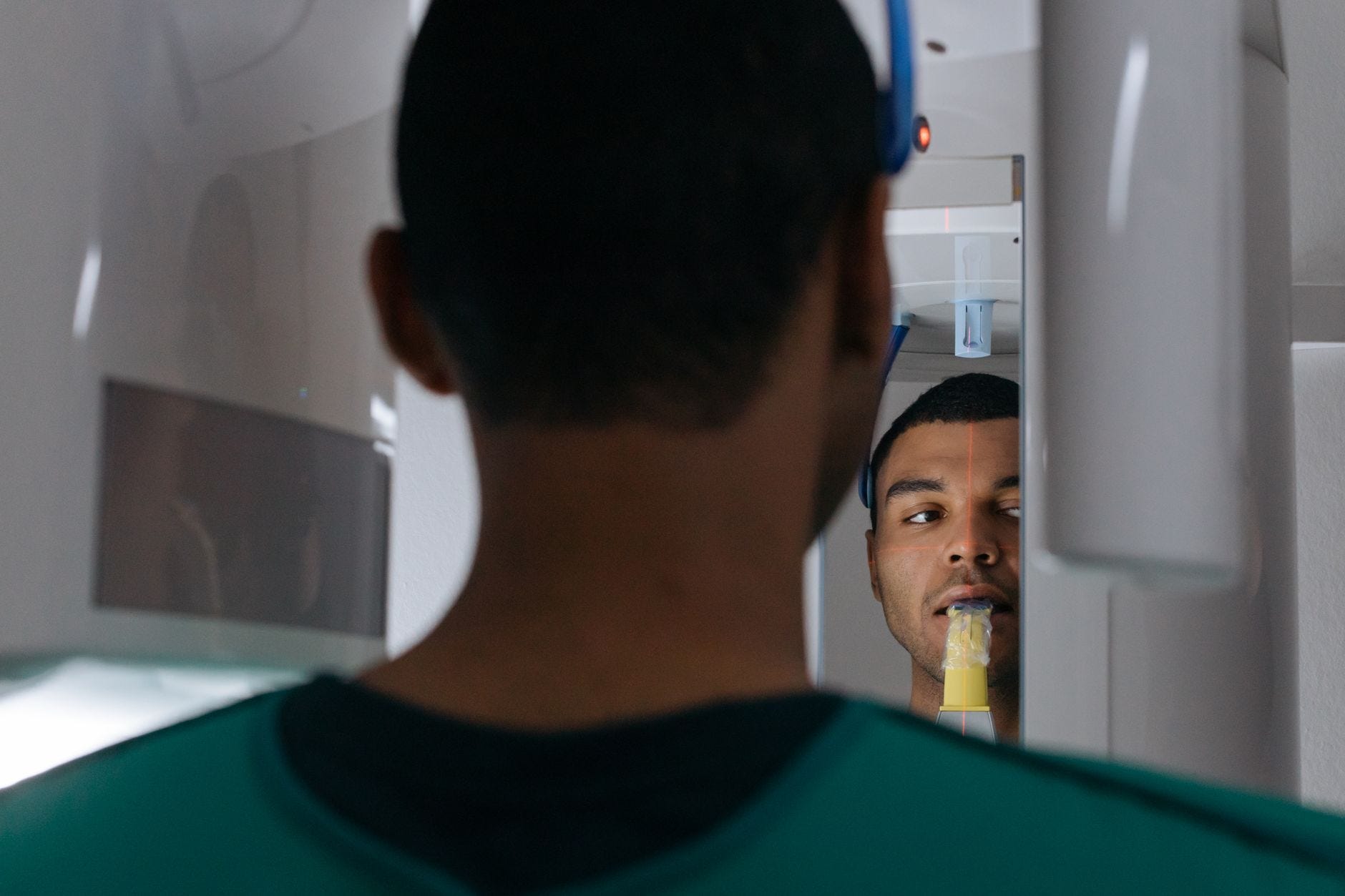
The scene below reflects what that moment looks like at Neko clinics: a patient receiving results with a clinician present, able to ask questions and understand next steps immediately.
Neko also published a 2025 Data Story from the first 1,469 members who returned for a second scan approximately one year after their first. The data shows measurable improvements in blood pressure, cholesterol, and blood sugar - early evidence that proactive tracking with personalized feedback produces behavioral change that standard annual checkups do not.
That is the full stack of the value proposition: find things you did not know were there, give you actionable data, and then measure whether you actually improve. The 75% rebooking rate says enough patients believe the loop is worth repeating.
The 6.4% and 1.2% numbers are not cherry-picked. They come from a general population of people who walked in without symptoms - not from a high-risk pre-screened cohort. In a country where the average American gets a physical once every several years and where preventive screening rates for conditions like lung cancer sit below 10% even among high-risk populations, those detection rates represent a meaningful clinical intervention.
3. The $7 Billion Valuation Question
The investor syndicate for this round is not your typical healthcare venture list.
Lightspeed and O.G. Venture Partners led. Atomico, General Catalyst, Lakestar, Liberty City Ventures, Positive Sum, and BDT and MSD participated. Among the individual investors: Mark Zuckerberg and Priscilla Chan, Ari Emanuel, Jimmy Iovine, Maria Sharapova, Tim Ferriss, will.i.am, Danny Meyer, Claudia Schiffer, and Thierry Henry.
The celebrity component is strategic, not cosmetic. Neko is building a consumer brand, and celebrity participation signals to the market where this product sits culturally. It sits with Equinox and Peloton and premium health clubs, not with Express Scripts and Aetna. The distribution channel is aspiration, not necessity.
The $7 billion valuation demands a clear-eyed examination. Neko has demonstrated product-market fit in two European markets. The 75% rebooking rate and 6x scan volume growth are real. But the US is a different behavioral market than the UK or Sweden, and the cash-pay assumption at scale has never been tested in a country where healthcare financial literacy runs as low as it does here.
📊 $338.61 billion: the size of the global preventive healthcare market in 2026, projected to reach $703 billion by 2033 at 11% CAGR.
At a $7 billion valuation, Neko is priced as if it captures a meaningful share of that market at scale - not as if it runs 10 clinics in New York. That is the bet Lightspeed is making.
4. The Cash-Pay Model: Strength and Liability
The most important structural decision Neko made is also its most consequential limitation.
By going fully cash-pay with no insurance dependency, Neko achieves three things simultaneously. First, it removes every incumbent health insurer as a competitive blocker - no prior authorization, no network negotiation, no reimbursement dispute. Second, it eliminates the margin-compression dynamic that has made preventive care economically unattractive for hospital systems. Third, it creates a clean, direct consumer relationship that generates behavioral data at a scale and specificity that no insurer or hospital currently possesses.
The liability is equally structural. The median household income in the United States is approximately $80,000. At $299 to $599 per scan per year, Neko is accessible to maybe 20-30% of the population on a comfortable basis. The patients most likely to benefit from early detection - those in FQHCs, those on Medicaid, those in rural areas with no preventive care infrastructure - are precisely the patients the cash-pay model cannot reach.
That gap is not a failure of Neko's design. It is the fundamental tension of building a consumer premium health product in a country where health equity is the central policy challenge of the decade. Neko routes around the broken system for the people who can afford to. It does not fix the system for the people who cannot.
The comparison below illustrates what early detection via Neko costs versus the alternative - finding the same problem through the traditional US healthcare system after it becomes an emergency.
The math works for the individual. Whether it works for the healthcare system - whether Neko actually reduces total downstream utilization enough to matter at a population level - is the open research question. That is what the US expansion will begin to answer.
5. What the US Expansion Actually Means
New York City in fall 2026 is not just a clinic opening. It is a market validation experiment for a $7 billion hypothesis.
The UK and Sweden have single-payer health systems with strong primary care infrastructure and a population accustomed to national health service framing. The US has fragmented, employer-sponsored insurance, a primary care shortage, and a consumer market that already spends $60 billion per year on wellness products it often cannot quantify. That is, arguably, a better market for Neko's model - not a harder one.
The strategic question is whether Neko's premium positioning holds against the inevitable competitive response. Once a company demonstrates $7 billion in preventive health consumer demand, incumbents notice. Walgreens, CVS, Amazon, and Apple all have clinic infrastructure and consumer relationships that could, in theory, be redirected toward a similar scanning model. Hims and Hers, Forward Health (which subsequently closed), and a range of DTC health startups have tried adjacent models with mixed results.
What Neko has that competitors will struggle to replicate in the near term is proprietary hardware, 100,000 scans worth of training data, and a clinician-in-the-loop model that differentiates it from wellness apps. The scan room itself is not something you license from a third-party device vendor. It was built by Neko.
6. The Competitive Landscape in Preventive Scanning
Neko is not the only company operating in the full-body preventive scanning space. Prenuvo, based in Vancouver, offers a whole-body MRI at $2,499 and has expanded to multiple US cities. Ezra offers AI-powered MRI scanning for cancer detection. HealthQuest and a range of concierge medicine providers have offered executive health panels for decades.
What separates Neko from those models is price point, speed, and clinical integration. At $299 in the UK versus $2,499 for Prenuvo's MRI, Neko is targeting a fundamentally different volume play. The 60-minute turnaround versus a 3-hour MRI session changes the addressable market substantially. And the same-day clinician consultation - rather than results delivered via PDF - creates a different class of care experience.
Prenuvo has raised approximately $70 million. Neko just raised $700 million. The valuation gap reflects not just the product difference but the scale ambition. Neko is building toward a global chain of preventive health clinics. Prenuvo is building a specialized MRI service. They are not the same company.
📊 $75.11 billion: the 2026 US Direct Primary Care market (cash-pay), projected to grow to $95.43 billion by 2030 at 6.2% CAGR.
Deep Dive
The Financial Architecture of Prevention at Scale
The preventive healthcare technologies market is valued at $338.61 billion globally in 2026 and projected to reach $703 billion by 2033 at an 11% compound annual growth rate. North America holds 38.7% of that market. The numbers reflect a structural shift already underway, not a speculative future.
The chart below shows the projected growth trajectory of that market through 2033.
For Neko to justify a $7 billion valuation, the math requires capturing a meaningful share of that growth. A 1% share of the North American preventive health market by 2030 represents approximately $2 billion in annual revenue. At a typical SaaS-adjacent multiple, that supports a $10 to $20 billion valuation. At a 2% share with strong margin structure, the venture math works.
The early detection cost comparison below puts the individual economics in stark relief. The cost of finding a problem through Neko versus finding the same problem through the emergency care pathway is not a marginal difference.
The counterargument is that the US is not a market where consumer behavior reliably maps to financial rationality in healthcare. Americans significantly underspend on preventive care relative to what the downstream cost savings would suggest they should. Behavioral economics, not clinical evidence, is the primary barrier to adoption.
That is precisely why the $700 million matters. Neko has enough capital to market its way through initial behavioral inertia, open multiple high-traffic urban clinics simultaneously, and create the social proof loop - friends telling friends about what they found, what they caught early, what they did about it - that no amount of advertising can manufacture as efficiently.
Scenario Analysis: Three Paths for Neko in the US Market
Scenario A: Consumer Category Leader
Neko successfully establishes itself as the Equinox of preventive health scanning. It opens 50 to 100 clinics across major US metros by 2030, achieves 500,000 to 1 million annual scans in the US alone, and commands a 70%+ rebooking rate matching or exceeding UK performance. In this scenario, the $7 billion valuation looks like a bargain entry point.
The prerequisite: New York succeeds. The NYC clinic becomes demonstrably overbooked within 12 months, driving waitlists in adjacent markets and creating earned media that corporate marketing cannot.
Scenario B: Niche Premium Stabilization
Neko successfully serves the top 10 to 15% of US consumers by income and health consciousness, operates 20 to 30 premium urban clinics profitably, and builds a durable direct-to-consumer health monitoring business without achieving mass-market penetration. Valuation stabilizes at $4 to $6 billion. Investors achieve a 2 to 3x return. The company becomes a durable but bounded business.
The prerequisite: Price discipline. At $299, Neko is already at the lower end of premium. Pressure to expand addressable market by reducing price risks margin destruction.
Scenario C: The Access Problem Forces a Pivot
Competitive and regulatory pressure mounts as Neko's model demonstrates effectiveness. Health systems lobby for insurance coverage requirements or licensing restrictions on preventive scanning. Consumer demand is strong but concentrated in top-income ZIP codes. Neko pivots toward employer benefits partnerships or insurance reimbursement integration - changing the model fundamentally.
The prerequisite: A major findings story that creates liability or regulatory attention, or a competitive entrant with insurance integration that undercuts the cash-pay positioning.
What This Means For You
FQHC executives and community health center leaders: Neko's model is a preview of demand-side prevention expectations that will eventually reach your patient population - not through Neko itself, but through the cultural shift it accelerates. Begin tracking how many of your high-income or dual-eligible patients are seeking preventive screening elsewhere. The data gap you create by not knowing is a strategic risk.
Health system administrators and CMOs: Model the downstream referral opportunity. Neko's data shows 6.4% of scanned patients require specialist follow-up. In a city of one million with 10,000 Neko scans per year, that is 640 new specialist referrals annually from one clinic. Build a relationship with the local Neko operation before your competitor does.
Radiologists and pulmonologists: Neko's scan does not replace CT-based lung cancer screening under CPT 0721T. It is not reading for pulmonary nodules the way a radiologist reads a low-dose CT. But it is capturing chest and circulatory signals that may generate downstream imaging referrals. Track the referral patterns from any Neko clinic that opens in your market.
Healthcare investors and founders: The $7 billion valuation sets a new benchmark for prevention-focused consumer health. The funding signals institutional belief that prevention can be a consumer category, not just a policy aspiration. Adjacent opportunities: AI-powered risk stratification tools that can plug into cash-pay clinic workflows, specialty diagnostics that Neko's scan can identify but not treat, and population-level data products built on prevention cohort data.
Policy advocates: Neko's model raises a structural equity question that the current funding round does not resolve. If early detection at $299 per year dramatically improves health outcomes for the top income quartile, and Medicaid populations continue receiving late-stage diagnoses at four times the rate, the detection gap becomes a policy failure with measurable consequences. The evidence Neko is generating will eventually become an argument for public-sector funding of preventive scanning access.
Closing
Neko Health's $700 million Series C is not primarily a story about a company. It is a story about an incentive structure failing visibly enough that $700 million in private capital found a better path around it.
The US healthcare system is the most expensive in the world and among the worst in preventive outcomes. That gap has existed for decades. What has changed is that the technology to detect problems before they become emergencies now fits in a 60-minute clinic visit, and a meaningful share of consumers is willing to pay for it directly.
The New York clinic opening in fall 2026 will be the most watched real-world test of whether American health behavior matches the waitlist numbers. Neko needs people to actually show up, come back, and tell their friends. The science says they should. The behavioral economics are less certain.
What does Neko's model tell you about the prevention gap in the patient populations you serve? Write to me at jonathan@oatmealhealth.com.
About the Author
Jonathan Govette is the Co-Founder and CEO of Oatmeal Health, an AI lung cancer diagnostic company catching cancers earlier in the communities that need it most. Oatmeal uses AI to identify unscreened high-risk patients, navigate them to care, and score every lung CT for malignancy risk - billed under CPT 0721T. Stage I survival is 77%. Stage IV is 9%. We work in FQHCs because that gap is largest there.
Jonathan writes daily about radiology, pulmonology, AI diagnostics, health policy, hospital operations, and healthcare startups.
Subscribe to stay ahead of healthcare's most important shifts. Weekly deep-dives on AI, radiology, health policy, FQHCs, and the business of healthcare - written for operators, clinicians, and investors who want the signal, not the noise. Subscribe at oatmealhealthjonathangovette.substack.com
Key References
Neko Health official press release: $700M Series C ahead of US launch (July 15, 2026) - https://www.nekohealth.com/us/en/press/neko-health-raises-usd700m-series-c-ahead-of-us-launch
TechCrunch: "Daniel Ek's body-scanning startup Neko Health raises another $700M" (July 15, 2026) - https://techcrunch.com/2026/07/15/daniel-eks-body-scanning-startup-neko-health-raises-another-700m/
SNS Insider: Preventive Healthcare Technologies Market Report - $338.61B in 2026, projected $703B by 2033 - https://www.globenewswire.com/news-release/2026/07/14/3327117/0/en/Preventive-Healthcare-Technologies-and-Services-Market-Size-to-Surpass-USD-1-009.14-Billion-by-2035-SNS-Insider.html
Neko Health Data Story: first 4,362 scans findings (6.4% medically significant, 1.2% immediate care) - https://www.nekohealth.com/se/en/repeat-scans-show-health-improvements
Startup Spotlight: "This Week in Startups: 5 Rounds That Actually Matter" (July 17, 2026) - https://www.startupspotlight.org/p/this-week-in-startups-5-rounds-that-matter-july-13-16-2026


